![]() |
||
|---|---|---|
|
Sustainability Sustainability is something that all farmers practice – to some degree. That degree depends on their ability to obtain a price for their product enabling them to be proper stewards of the people they work with and the land. But first, let me describe how we farm at Hacienda La Esmeralda.
To sustain the people, the land, the owners and the environment is not an optional matter. These things have, do and will depend on the ‘sustainability’ of our farming skills. After not only three generations of owners, but also of employees, we all work for sustainability. First comes sustainability of people. Our business practices must always be such that our products will readily sell at a level which will keep everyone (owners and workers) fed, clothed, educated and in good health. Beyond that we strive that everyone has a degree of security in their lives to permit a home and a pension at retirement. When this degree of sustainability of people is defined, the rest tends to follow as day the night. Just as you cannot poison your farm and expect it to continue producing at high yields for 35 years, you cannot fail to replace the phosphorous, calcium and potassium removed from the soil and shipped away in coffee to California. The need for replacement applications of fertilizers is just as much a part of sustainability as is avoiding the use of pesticides that will kill people. Both are things that naturally follow if you first decide you want to sustain people. Enormous tracts of virgin forest have little to do with sustaining people, but maintenance of forest along watersheds has everything to do with sustainability. A producing farm undoubtedly has a higher animal biomass than virgin forest as well as a higher photosynthetic rate. It is ‘producing’ – it is not in a resting equilibrium as is a forest. That certainly does not prevent it from being sustainable. Three millennia of agrarian development has to have taught farmers something. – if nothing else, it has taught them to ‘sustain’. With the above serving as a preface, I would like to describe what we do at Esmeralda to be ‘sustainable’. First we strive, consistently, to produce a very high quality product such that it will produce the needed revenue to sustain people and land at the level described. This is done through continuous training, education, seminars and, in our case, certification (ourselves writing the manuals) of both milk and coffee with ISO 9002. This has enabled us to have a product that has been appreciated and for which a premium is paid in both products. This premium, in turn, enables us to do some things socially, which have been rewarding.
THE PEOPLE At coffee harvest,
families usually arrive in poor nutritional condition. One of our first
innovations was a day care center for kids.
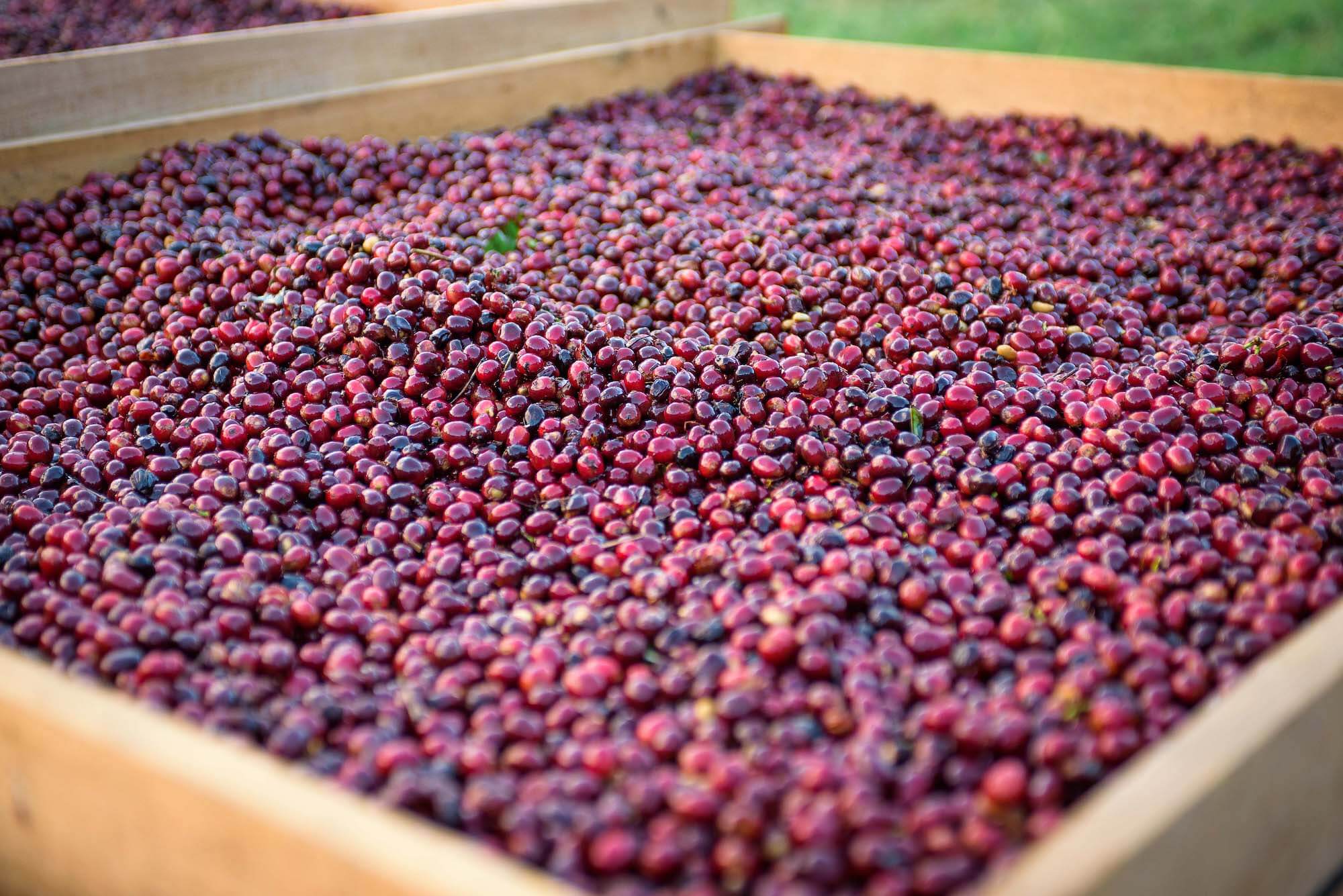
Finally, for the coffee harvesters, experience has taught us that they leave our farm at the end of the harvest (March) with some money in cash and return to their homes in the mountains. When the rains come in May they plant some corn, beans and root vegetables. These are ready for harvest in August. By June or July their cash is exhausted, nothing is ready for harvest, and a time of great trial begins. This is the time when nursing children tend to starve and maternal health reaches dangerously low levels. In order to help at this point, we go to the area where our workers originate (San Felix) on the first of June and distribute an additional bonus of between 10 and 20% of the earnings gained during the harvest (depending on how good a year it was for coffee). During the harvest we always pay on a par or a little more than our neighbors. This is often enough to make the difference between life and death until their own harvest comes in. Due to the premium we receive for our geisha, we are able to pay the geisha pickers 3X the average price paid for harvesting. As you can imagine, harvesters line up for this privilege, and are extremely careful, making sure to pick only ripe fruit. The geisha pickers also receive a higher bonus at the end of the year. Unfortunately, the geisha is currently approximately 3% of our total crop.
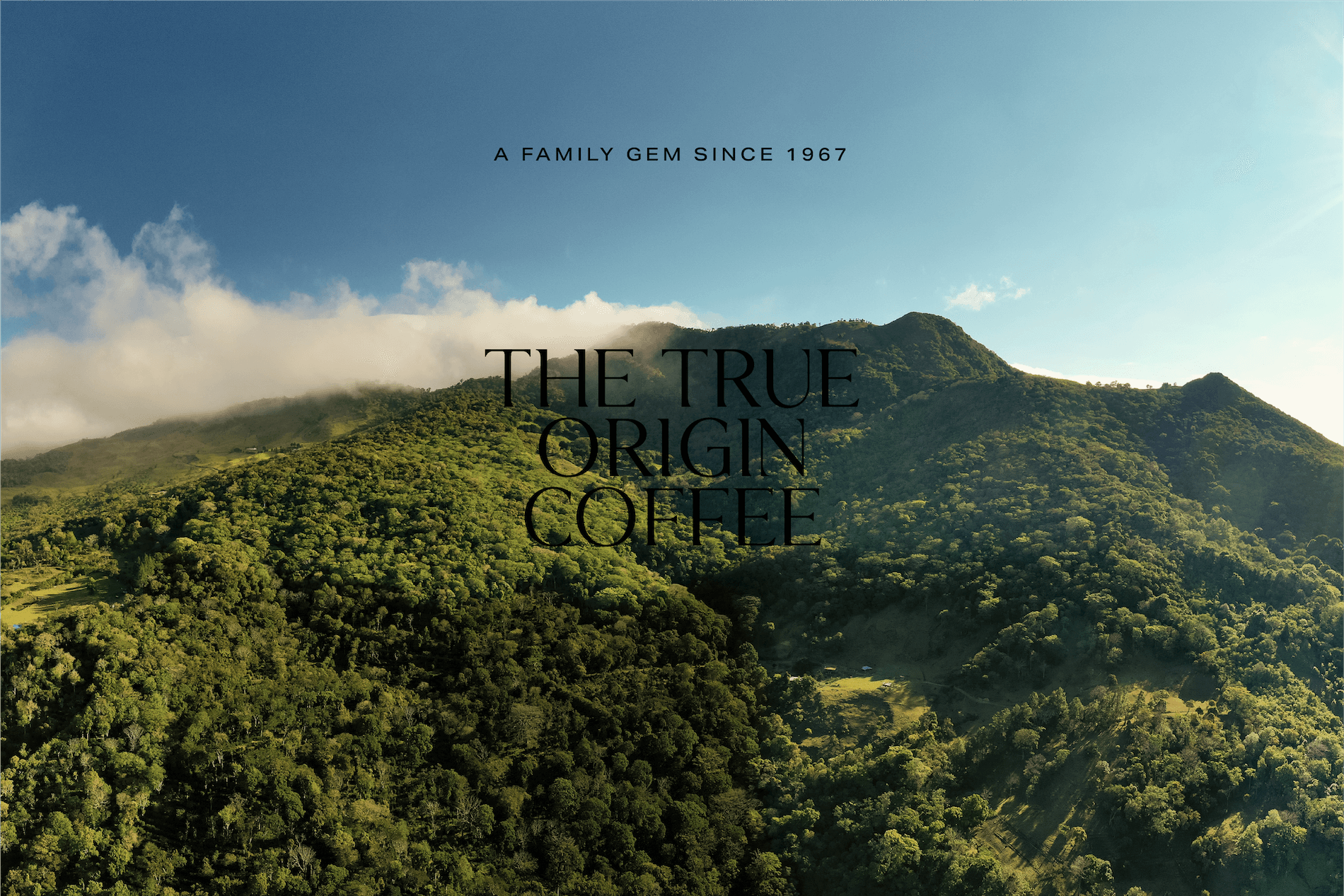
THE LAND Our soils are volcanic with high levels of organic material, poor in minerals and
with pH values of 4.5 to 6. Mostly, we try to supplement the minerals and
otherwise keep them as they are. Structurally they are excellent and drain
very well. Due to the good drainage, erosion is minimal. However, we
continue to plant various trees and grasses as well as strict contour
planting to keep it that way. We generally have more than 75 large trees
per hectare that we prune twice a year. These help with shade during the
dry season and provide a wealth of organic material in addition to the
litter falling from the coffee trees.
When we detect a fall in pH values, we apply lime to both correct the problem and restore calcium and magnesium removed by the coffee. Likewise, fertilizer applications are carefully calculated to replace the quantity of minerals removed by the previous crop (per hectare, 450 lbs N, 450 lbs K, 40 lbs P, 60 lbs Ca, 25 lbs. Mg, plus small amounts of B, Zn, and S) plus an additional 10% to account for minerals washed away by our annual rainfall of about 160 inches. To not apply adequate mineral fertilizers, I consider a criminal failure of land stewardship. After repeated crops of tobacco were farmed in the southeastern US, the land become mineral depleted, abandoned, ruined, and farming ‘unsustainable’. This sort of error cannot be allowed to repeat itself in the name of ‘organic’ farming.
In adult stands of coffee, there is almost no weed growth due to the shade provided by the coffee itself. As part of coffee cultivation, the trees are pruned every four to five years, row by row. The row that is pruned will usually allow weed growth during the following year and this does require cleaning – three times per year in our case. The first is done mechanically with machete, the second with glyfosato (aka Round-up and about the most innocuous weed killer known) and the third with machete. Coffee does suffer terribly, in Central America, from fungi – two or three varieties account for 95% of the problem. Fungal resistance, introduced from traditional genetic breeding methods, has had marginal success. In the most notable cases resistance to roya has resulted in either very low yields (var. Geisha) or poor cup quality and susceptibility to other fungi (var. Colombia or Catimor). As a result, the most commonly used pesticides in coffee are fungicides. As more stringent measures have been taken to remove dangerous chemicals from use, the better fungicides have also disappeared. Those which remain are but marginally useful, expensive and require frequent application. Both the use of fungicides and the fungal problem could be eliminated by introduction of fungal resistance through genetic manipulation – a truly ‘organic’ solution to the problem. However, the ‘Organic’ purists have rejected this approach. One thing that does help to relieve the problem is better ventilation of the plantings. Heavy shade would obviously counteract that effect.
THE BUYER These are among the things we do to sustain our lives, farm, and land. They are nothing extraordinary – just good farming practice and a respect for people. Without a good price for what we produce, both would be difficult to sustain. In a time of low prices, as we now have with coffee, it would be impossible under two circumstances: (1) that we had no diversification and (2) if we sold our product to greedy buyers. Esmeralda is blessed in that we are somewhat diversified, but more that we have dealt with buyers who share our concerns about the sustainability of people and land. |